

Recent share market falls and general market volatility have clearly followed the outbreak of war with Iran and the blocking of most oil shipments out of the Persian Gulf. While it is impossible to predict the exact outcome of this war, or when it might end, it is now evident that even in a ‘worst case scenario’, the dangerous and threatening regime that has been controlling Iran for many years will have been severely weakened for at least an extended period of time.

On a positive view, a new and much more freedom-oriented form of government could eventually emerge that could greatly benefit the region and the wider world. Ultimately, in a more stable geo-political environment, oil prices could subside considerably, taking inflation lower and providing a boost to global growth, while underpinning markets.
While there could be further heightened market volatility and investor nervousness for a time, as always, our advice to investors is to stay well diversified.
Read the full note below.
Published March 2026 by Conrad Burge, Head of Investments
Background
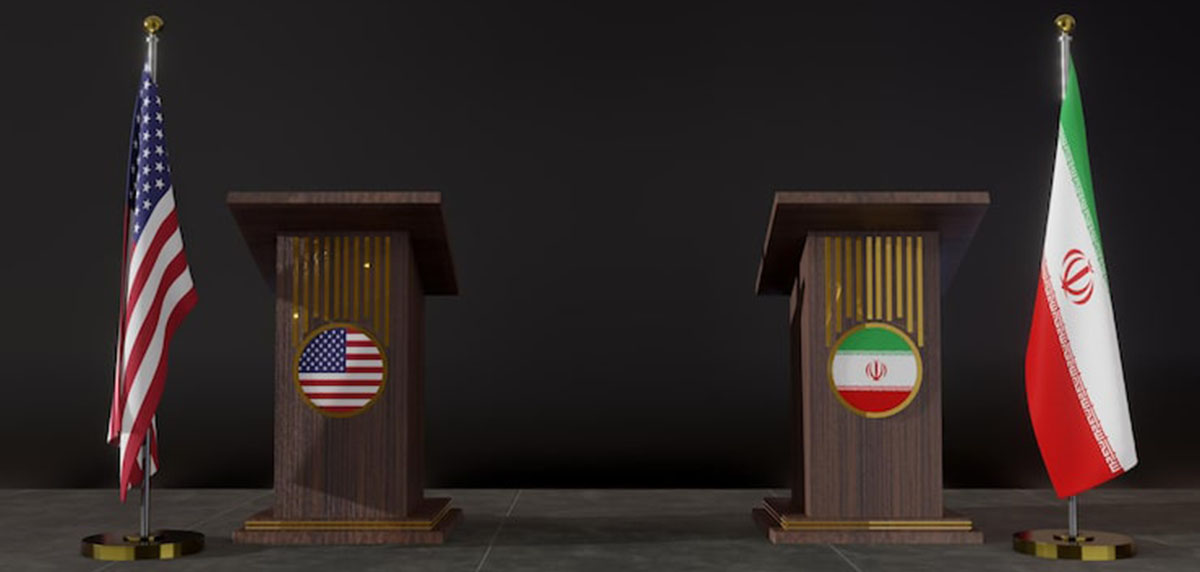
On 28 February this year, the US and Israel in partnership launched a full-scale aerial war against the regime which has been running Iran since the so-called revolution of 1979. This followed prolonged ‘supposed ‘negotiations’ which had been dragged out by Iran for many months, in fact since last June when President Trump called a halt to the hostilities that were underway at that time.
The proximate cause of the war has been Iran’s attempts over many years to develop the capacity to manufacture nuclear weapons, along with the ability to deliver such weapons by long range (even intercontinental) ballistic missiles. With evidence apparently mounting that Iran was again getting close to having this capacity despite attempts last year to destroy Iran’s nuclear facilities (in particular by using so-called ‘bunker busting’ bombs), the US administration felt that it was necessary to act quickly.
The questions for us as investors revolve around the potential effects of this war on stock markets and, to a lesser extent perhaps, on bond and even currency markets. The effects on some of these markets were felt almost immediately after the conflict began, with most (but not all) share markets dropping and most bond markets also dropping in price (with yields rising). There was clearly a negative reaction by investors to the news that the US and Israel had embarked on military conflict with no certainty that this could be resolved positively for the wider world. With the war still fully underway, we see the possible outcomes as follows:
• The best outcome for us as investors but also for the people of Iran, the wider Middle East and indeed for the whole world, would be for there to be a quick end to the war and a regime change. Ideally, we would see a pro-Western government of some kind installed instead of the extreme totalitarian Islamist cabal that has been in power since its takeover was facilitated by US President Carter and the French and UK governments in 1979. The chances of such an outcome we regard as reasonably high due to the fact that by all accounts a huge majority of the Iranian people want this regime to be replaced after experiencing decades of brutal rule by religious zealots kept in power by the fanatical soldiers of the so called Iranian Revolutionary Guards Corps (IRGC). Over many years, thousands of ordinary citizens have lost their lives (and tens of thousands in January this year alone) trying to protest against this tyrannical regime and now they may have a ‘once in a generation’ or even a ‘once in many generations’ opportunity to overthrow their oppressors and have leaders who are focused on improving living standards in the country rather than seeking to ruthlessly dominate the region and repress the populace.
• A reasonable but not the most preferred outcome would be for something like a ‘Venezuelan solution’. This would require someone amongst the current leadership to agree to whatever terms the US would insist on to enable the economy to function without the regime engaging in either the pursuit of nuclear weapons, the production of missiles or drones or other offensive military capability, the continued sponsorship of rogue and dangerous militias in Palestine (Hamas), Lebanon (Hezbollah) or Yemen (Houthis), or any further suppression of the domestic population. This we would see as probably the least likely outcome as the regime comprises people who are extremely fanatical and unlikely to agree to any kind of compromise with Western powers or to cede power to any real degree.
• The other potential outcome we anticipate would be for the current regime to simply wait out the war until the US tired of further engagement. This could potentially result from its ability to keep the Strait of Hormuz in the Persian Gulf closed and thus pressure the US by restricting the supply of oil to the rest of the world, given that approximately 20% of world oil production (around 20 million barrels of oil per day) flows through the Strait. In other words, the regime could potentially simply outlast the US (and Israel) and force the US to agree to terms that would allow the regime to stay in place but at the same time enable oil supply to be turned on again.
As to which of these outcomes is most likely we cannot say. However, we do expect that the war itself will probably come to some sort of end within weeks rather than anything much longer. Apart from anything else, the supply of ammunition for US and Israeli forces is likely to run short before too long.
Market Reaction
Since the start of this year, stock markets have mostly fallen after having mostly risen over the first two months.
By 18 March, market declines from the start of the year included 3% for the broad US market (S&P500 index), 5% for the technology-focused Nasdaq, 4% for the German market and 2% for France. On the other hand, the resource-heavy UK market was up 4%, Japan was up an impressive 10% and China was up 2%, with the latter markets being a surprise given their dependence on oil imported from the Gulf. Only the Indian market was severely dented, declining by 10% due to its own high reliance on oil imports from the Persian Gulf. Furthermore, bond markets were also mostly negatively affected, with, for example, US government bond yields up from 4.09% to 4.27% over the month to 18 March, UK yields up from 4.28% to 4.76% and German yields up from 4.54% to 4.74%, while the US dollar also rose.
These declines for most markets will have had a negative flow-on effect on our Fiducian Funds, including our diversified funds, which all have exposure of a greater or lesser extent to equities as well as bonds. While some markets have declined in recent days, this is to be expected as short-term market volatility is the price investors pay for better long-term returns than are provided by other investment opportunities. In the current environment, investors are understandably nervous about the economic outlook, with some commentators even predicting that the outcome could be disastrous for markets if a resolution to the fighting does not emerge within a very short time, which could lead to sustained higher inflation and global recession (‘stagflation’) for a time. However, in our view recession seems unlikely. In reality, this war has been ongoing ever since 1979 and at some stage it was going to have to be resolved by a full-scale ‘hot war’. With neither the US nor Israel having experienced much in the way of casualties, while almost completely destroying Iranian military capacity, we see any ultimate outcome as likely to favour the Western powers.
Fiducian’s Positioning
For some time now, our diversified funds have been overweight in international equities, where we have seen better value than in the domestic market, while as a defensive strategy, our allocations to both domestic and international bonds were raised. It is clear, however, that over the short-term these allocations could hurt us, at least until the war is resolved one way or another. Declining share markets and rising bond yields have a negative effect on our diversified allocations, with only cash holding steady in this environment. So-called ‘alternative’ investments (mostly illiquid and unlisted investments, which are only valued sporadically), also hold their value at least on paper but we do not hold these due to their illiquidity and lack of daily valuation. However, as noted above, we do not see this war as likely to last for more than a few weeks or a few months at most, while any early resolution could see equity markets rebound strongly and bond yields fall significantly and we are well positioned for this eventuality.
Furthermore, we see excellent value returning to many markets after some sectors, especially the broad US market, had become relatively expensive. This return of value particularly applies to top quality international technology stocks, where we regard the recent investor reaction to have been overdone. Fundamentally too, we regard the global economy as being reasonably healthy with solid ongoing growth prospects. We also anticipate that for most jurisdictions, monetary policy is likely to remain reasonably expansionary which could underpin markets and the broader economy.
For most investors, this period of market stress should be a time for holding our positions as we wait for the war to be resolved. However, there could be ongoing market volatility for a while, at least until investors see clear signs that growth is likely to be sustained and recession avoided. As and when the outlook begins to improve, markets could begin to trend up again. Trying to time the start of any sustained market recovery is an impossible task. We should keep in mind that the longer-term outlook remains positive and we remain focused on the potential market boost to be provided by an easing in geo-political tensions.
Conclusion
Recent share market falls and general market volatility have clearly followed the outbreak of war with Iran and the blocking of most oil shipments out of the Persian Gulf. While it is impossible to predict the exact outcome of this war, or when it might end, it is now evident that even in a ‘worst case scenario’, the dangerous and threatening regime that has been controlling Iran for many years will have been severely weakened for at least an extended period of time. On a positive view, a new and much more freedom-oriented form of government could eventually emerge that could greatly benefit the region and the wider world. Ultimately, in a more stable geo-political environment, oil prices could subside considerably, taking inflation lower and providing a boost to global growth, while underpinning markets.
While there could be further heightened market volatility and investor nervousness for a time, as always, our advice to investors is to stay well diversified. We recommend that a core part of an overall portfolio be held in our diversified funds, which comprise the Fiducian Capital Stable, Balanced, Growth and Ultra Growth Funds. Other asset sector and specialist funds that have greater risk can be used to capture further upside, as we continue to see good potential value in many equity sectors around the world.
Our asset allocation positions and moves are designed to benefit longer-term returns for clients and we recommend staying invested and riding through the current period of market turbulence, after which share markets could be expected to resume an upwards trajectory in time. For those investors who have particular concerns in the current environment, dollar-cost averaging into markets, as always, could represent a sensible way to gain market exposure.
Source: www.fiducian.com.au
Lindale Insurances Pty Ltd ATF Lindale Insurances Trust ABN 27 027 421 832 is a Franchisee of Fiducian Financial Services Pty Ltd, Level 4, 1 York Street, Sydney NSW 2000. AFSL 231103 ABN 46 094 765 134.
The information (including taxation) provided on this website is general in nature and does not consider your individual circumstances or needs. Do not act until you seek professional advice and consider a Product Disclosure Statement.
Disclaimer: The views expressed in this publication are solely those of the author; they are not reflective or indicative of Fiducian. They cannot be reproduced in any form without the express written consent of the author.