Your Trusted Doncaster Accountants & Financial Planning Partners

8 Practical Tips for Sole Traders to Grow Your Business

Running your own business as a sole trader can be both rewarding and challenging. You have the freedom to make your own decisions, work directly with your customers and shape the business around your goals – but you are also responsible for managing the finances, administration, tax obligations and day-to-day operations. 

As your business grows, it is important to regularly step back from working in the business and spend some time working on the business. 

Business Victoria recently highlighted eight practical areas that sole traders should review to help improve profitability, efficiency, cash flow and long-term growth. We have expanded on these tips below, with a particular focus on the financial and accounting considerations that can help your business grow sustainably. 
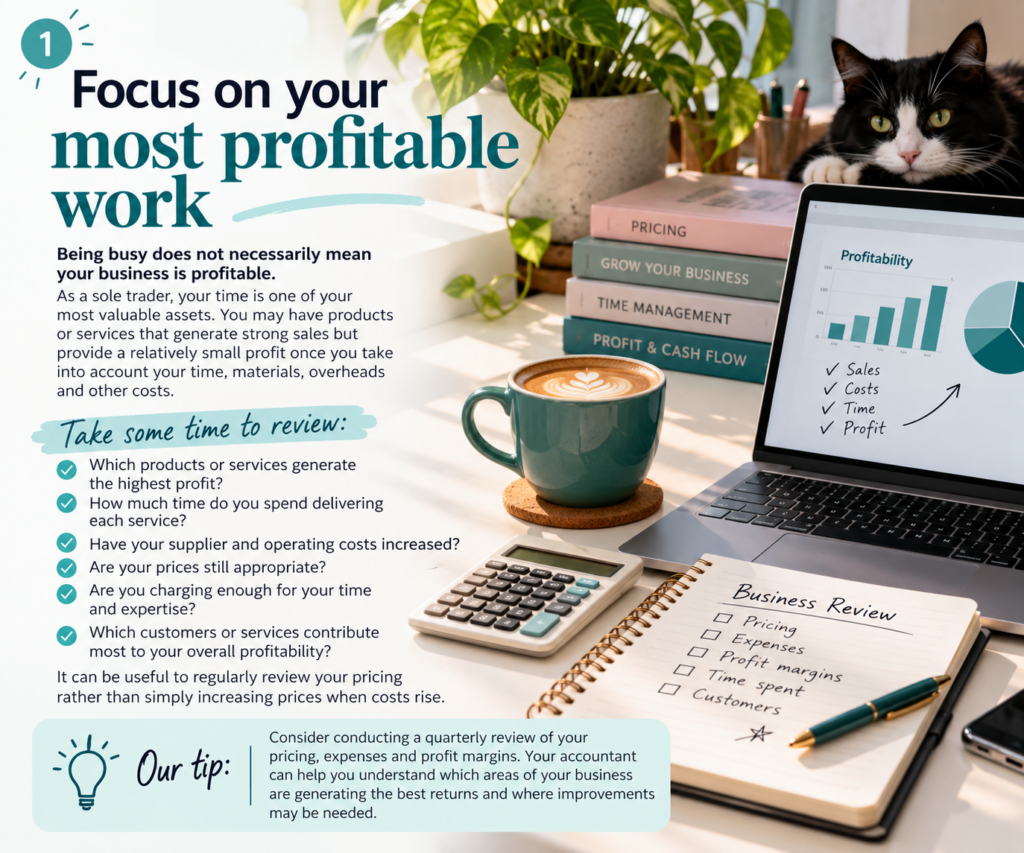
1. Focus on your most profitable work Being busy does not necessarily mean your business is profitable. As a sole trader, your time is one of your most valuable assets. You may have products or services that generate strong sales but provide a relatively small profit once you take into account your time, materials, overheads and other costs. Take some time to review: Which products or services generate the highest profit? How much time do you spend delivering each service? Have your supplier and operating costs increased? Are your prices still appropriate? Are you charging enough for your time and expertise? Which customers or services contribute most to your overall profitability? It can be useful to regularly review your pricing rather than simply increasing prices when costs rise. Our tip: Consider conducting a quarterly review of your pricing, expenses and profit margins. Your accountant can help you understand which areas of your business are generating the best returns and where improvements may be needed.
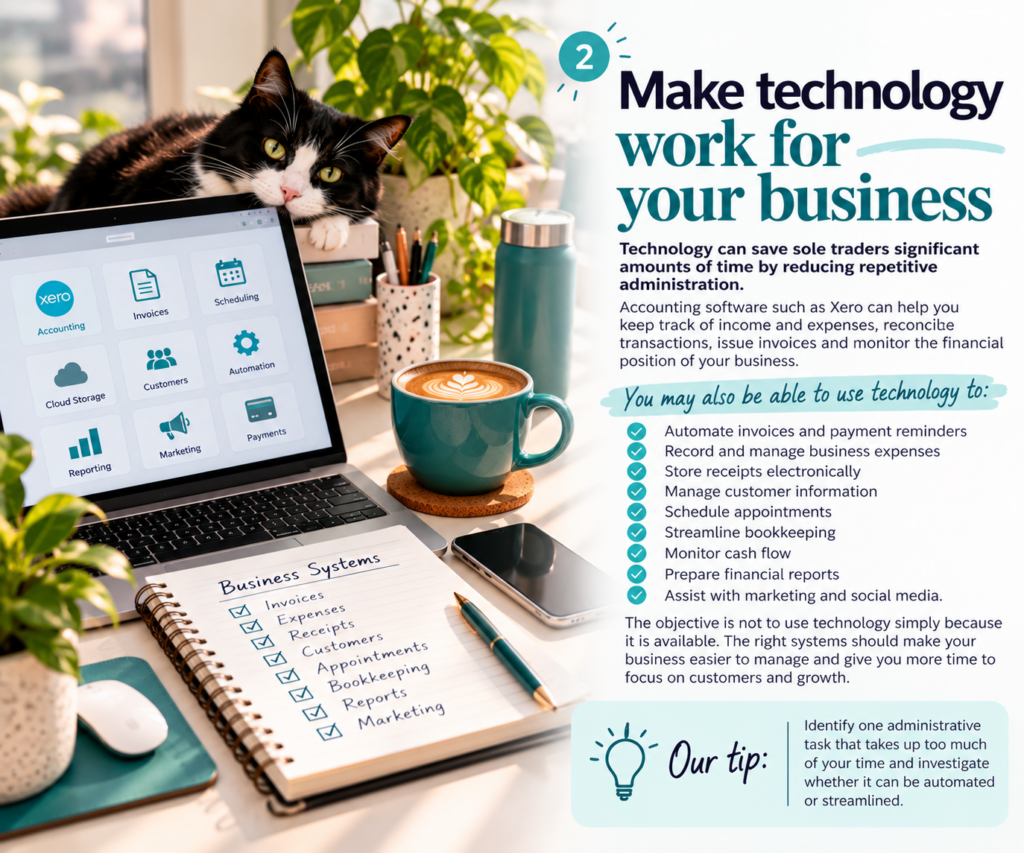
2. Make technology work for your business Technology can save sole traders significant amounts of time by reducing repetitive administration. Accounting software such as Xero can help you keep track of income and expenses, reconcile transactions, issue invoices and monitor the financial position of your business. You may also be able to use technology to: Automate invoices and payment reminders Record and manage business expenses Store receipts electronically Manage customer information Schedule appointments Streamline bookkeeping Monitor cash flow Prepare financial reports Assist with marketing and social media. The objective is not to use technology simply because it is available. The right systems should make your business easier to manage and give you more time to focus on customers and growth. Our tip: Identify one administrative task that takes up too much of your time and investigate whether it can be automated or streamlined.
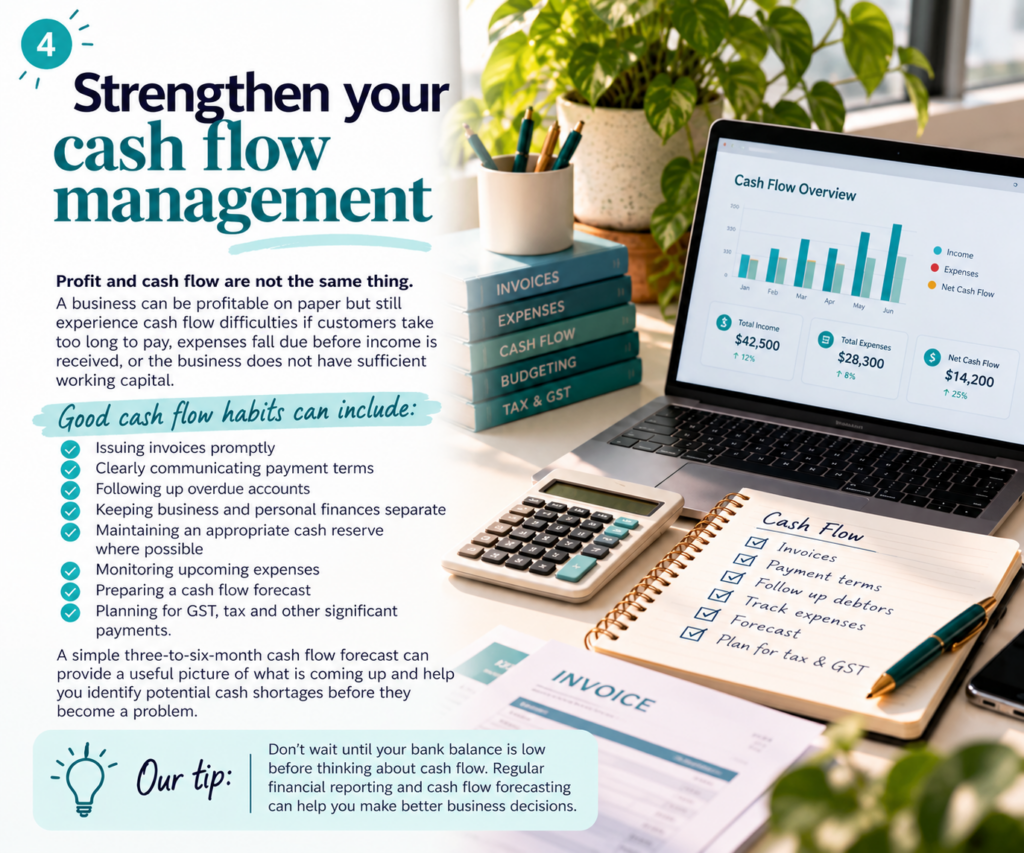
4. Strengthen your cash flow management Profit and cash flow are not the same thing. A business can be profitable on paper but still experience cash flow difficulties if customers take too long to pay, expenses fall due before income is received, or the business does not have sufficient working capital. Good cash flow habits can include: Issuing invoices promptly Clearly communicating payment terms Following up overdue accounts Keeping business and personal finances separate Maintaining an appropriate cash reserve where possible Monitoring upcoming expenses Preparing a cash flow forecast Planning for GST, tax and other significant payments. A simple three-to-six-month cash flow forecast can provide a useful picture of what is coming up and help you identify potential cash shortages before they become a problem. Our tip: Don't wait until your bank balance is low before thinking about cash flow. Regular financial reporting and cash flow forecasting can help you make better business decisions.
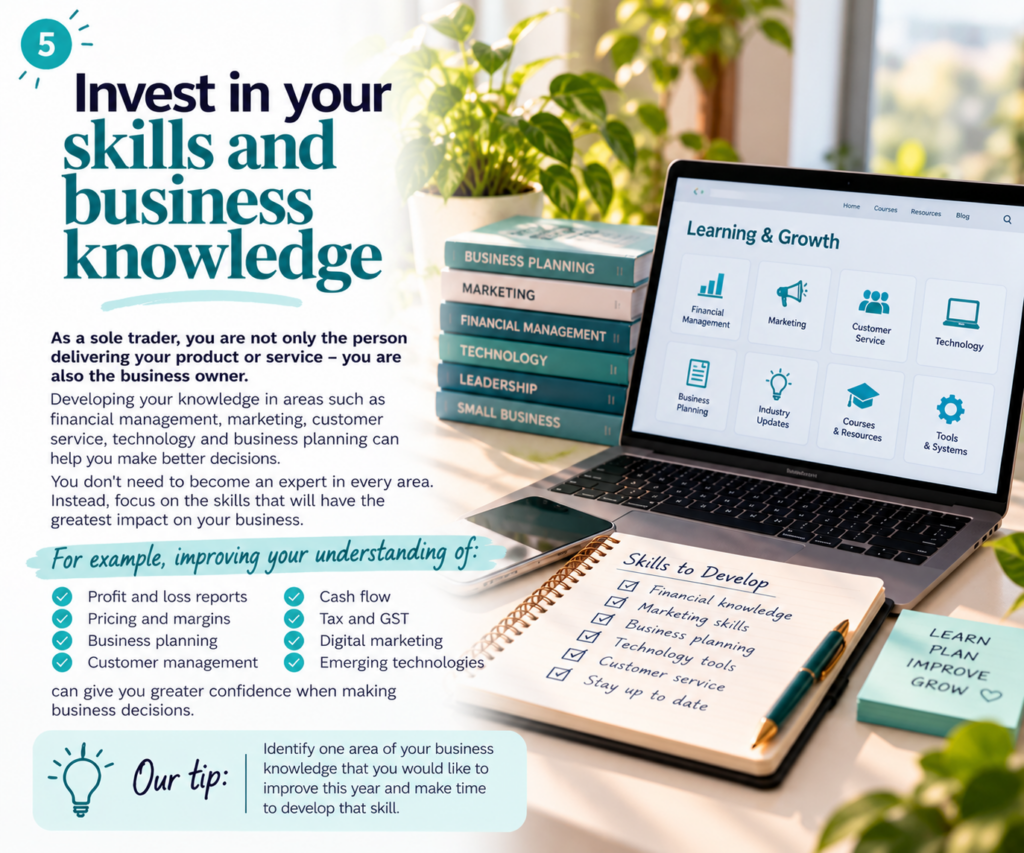
5. Invest in your skills and business knowledge As a sole trader, you are not only the person delivering your product or service – you are also the business owner. Developing your knowledge in areas such as financial management, marketing, customer service, technology and business planning can help you make better decisions. You don't need to become an expert in every area. Instead, focus on the skills that will have the greatest impact on your business. For example, improving your understanding of: Profit and loss reports Cash flow Pricing and margins Tax and GST Business planning Digital marketing Customer management Emerging technologies can give you greater confidence when making business decisions. Our tip: Identify one area of your business knowledge that you would like to improve this year and make time to develop that skill.
6. Protect your business from cyber threats Cybersecurity is an important consideration for businesses of every size. Sole traders may assume that their business is too small to be targeted, but cyber incidents and scams can affect businesses regardless of their size. A cyber incident could result in financial loss, disruption to your operations or exposure of customer information. Simple steps can make a difference: Use strong, unique passwords Enable multi-factor authentication where available Keep software and devices updated Regularly back up important information Be cautious when clicking links or opening attachments Verify unusual payment requests Educate yourself about common business scams. Cybersecurity should be considered part of your normal business risk management rather than an optional extra. Our tip: Review the security of your key business accounts and enable multi-factor authentication wherever possible.
7. Build your network and support system Running a business on your own does not mean you have to operate in isolation. Building relationships with other business owners and professionals can provide valuable ideas, referrals, support and opportunities for collaboration. Consider: Joining a local business network Participating in industry associations Attending business breakfasts and networking events Building relationships with complementary businesses Connecting with other business owners Developing professional relationships with your accountant, financial adviser, lawyer and other trusted advisers. A strong professional network can also provide a valuable sounding board when you are considering a major business decision. Our tip: Set yourself a goal of attending at least one networking event or business activity over the next month.
Small Improvements Can Make a Big Difference Growing a business does not always mean taking on more customers, working longer hours or increasing sales. Sometimes the best opportunities for growth come from improving what you are already doing. By regularly reviewing your profitability, pricing, technology, marketing, cash flow, skills, cybersecurity, professional network and tax affairs, you can make informed decisions about where your business should go next. For sole traders, having good financial information is particularly important. Understanding your numbers can help you identify opportunities, manage risks and make decisions based on facts rather than assumptions.
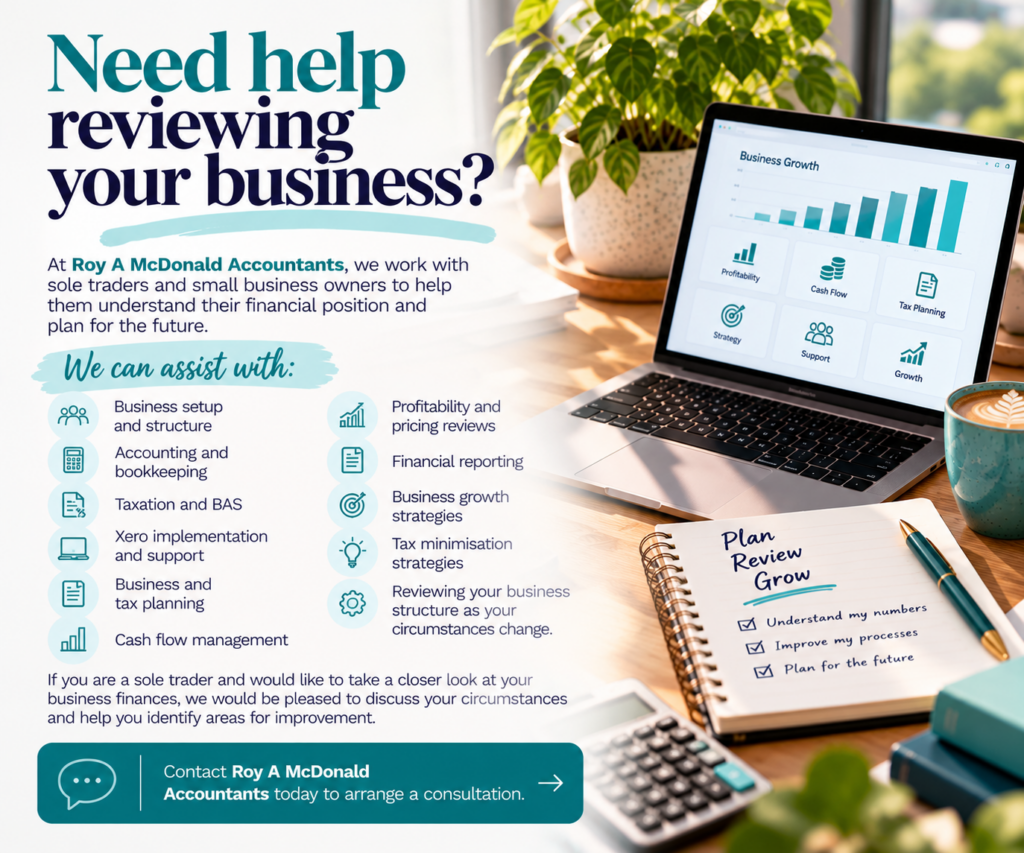
Need help reviewing your business? At Roy A McDonald Accountants, we work with sole traders and small business owners to help them understand their financial position and plan for the future. We can assist with: Business setup and structure Accounting and bookkeeping Taxation and BAS Xero implementation and support Business and tax planning Cash flow management Profitability and pricing reviews Financial reporting Business growth strategies Tax minimisation strategies Reviewing your business structure as your circumstances change. If you are a sole trader and would like to take a closer look at your business finances, we would be pleased to discuss your circumstances and help you identify areas for improvement.

This article is general information only and does not constitute financial, taxation or business advice. Your individual circumstances should be considered before making any business or tax decisions. 

Source: Business Victoria, 8 practical tips for sole traders to grow their business, updated 26 August 2026. 

Scroll to Top