


Running a trade business can be demanding. Whether you are a builder, electrician, plumber, carpenter, landscaper or another type of tradesperson, your time is often spent on the tools, managing customers, quoting jobs and keeping your business moving.
Keeping up with tax and record-keeping obligations can sometimes take a back seat.
The Australian Taxation Office (ATO) has introduced TaxTools4Tradies, a collection of practical resources designed to help tradies understand and manage some of their tax and business responsibilities.
For tradies who are running their own business, these tools can be a useful starting point for understanding what needs to be considered. However, every business is different, and professional advice can help ensure your business structure, record keeping and tax arrangements are appropriate for your circumstances.
What is TaxTools4Tradies?
TaxTools4Tradies is an ATO resource aimed at helping tradespeople access practical information about tax and business obligations.
The resources are designed to make tax information easier to understand and provide tradies with practical guidance they can use when managing their business.
For busy tradespeople, having reliable information in one place can make it easier to stay on top of important business responsibilities.
Why tax planning matters for tradies
When you are busy completing jobs, sending invoices and purchasing materials, it can be easy to focus on the day-to-day running of the business rather than looking at the bigger financial picture.
However, good tax and financial management should be part of your regular business processes.
Keeping accurate records can help you:
- Understand how profitable your business really is
- Keep track of income and business expenses
- Prepare for your tax obligations
- Monitor cash flow
- Identify expenses that may be deductible
- Make more informed business decisions
- Reduce the risk of unexpected tax bills
- Provide the information your accountant needs to prepare your tax return
Good record keeping also makes it much easier to review your business performance and identify areas where improvements may be possible.
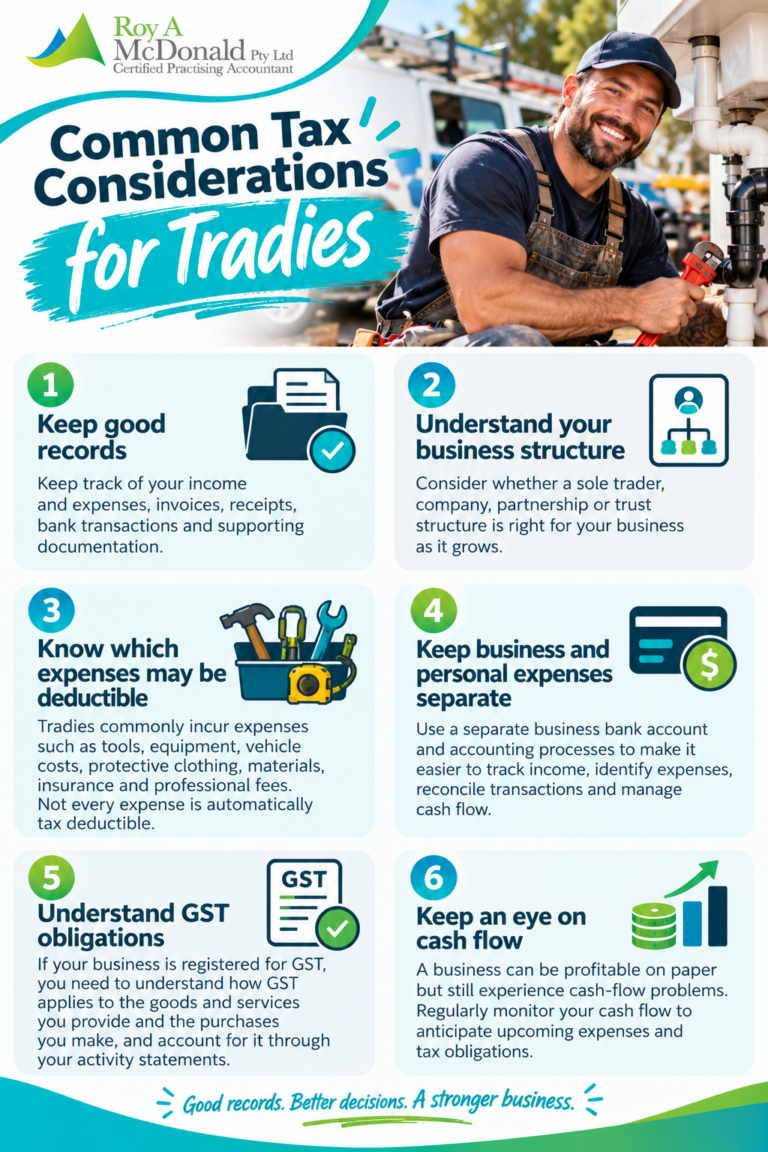
Common tax considerations for tradies
Depending on your circumstances, there are several tax and business considerations that may be relevant to your trade business.
1. Keep Good Records
Keeping accurate records is essential for running a successful business. You should retain records of your business income and expenses, including invoices, receipts, bank transactions and other supporting documentation.
Digital accounting systems such as Xero can help keep your financial information organised and make it easier to monitor business performance throughout the year.
2. Understand Your Business Structure
Many tradies start as sole traders because this structure is relatively simple to establish and operate. However, as your business grows, it may be worth considering whether a company, partnership or trust would be more suitable.
Changing your business structure can have tax, legal and administrative consequences, so it’s important to seek professional advice before making any changes.
3. Know Which Expenses May Be Deductible
Common business expenses for tradies include tools, equipment, vehicle costs, protective clothing, materials, insurance and professional fees.
However, not every expense is automatically tax deductible. The treatment depends on the nature of the expense and how it relates to earning your business income. Some assets and equipment may also need to be depreciated rather than claimed as an immediate deduction.
Keeping receipts and discussing significant purchases with your accountant can help ensure expenses are treated correctly.
4. Keep Business and Personal Expenses Separate
Keeping your business transactions separate from your personal finances makes managing your business much easier. A dedicated business bank account and appropriate accounting processes can help you track income, identify expenses, reconcile transactions and monitor cash flow.
It also simplifies financial reporting and helps you meet your tax and GST obligations, saving time when preparing your tax return.
5. Understand Your GST Obligations
If your business is registered for GST, you need to understand how GST applies to the goods and services you provide and the purchases you make.
You may need to charge GST on taxable sales and report your GST obligations through your activity statements. As your business grows, it’s worth regularly reviewing your GST registration and reporting requirements to ensure you remain compliant.
6. Keep an Eye on Cash Flow
A business can be profitable on paper but still experience cash-flow problems. Tradies often face significant upfront costs for materials, wages, subcontractors, vehicles and equipment before receiving payment from customers.
Regularly monitoring your cash flow helps you plan for upcoming expenses and tax obligations. Your accountant can also help you understand your financial reports and identify ways to improve cash-flow management.
Don't leave your tax planning until tax time
Rather than simply looking backwards at what happened, regular tax and financial reviews allow you to look ahead.
For example, you may want to discuss:
- Planned equipment or vehicle purchases
- Business expansion
- Hiring employees
- Engaging subcontractors
- Changing your business structure
- GST registration
- Cash-flow requirements
- Tax instalments
- Business profitability
- Personal drawings and business finances
The earlier you discuss these matters, the more opportunity there may be to plan appropriately.

TaxTools4Tradies is a useful starting point – but every business is different
The ATO’s TaxTools4Tradies resources can provide useful general information, particularly for tradies who are new to running a business or want to improve their understanding of their tax obligations.
However, online resources cannot take into account the complete circumstances of your individual business.
Your business structure, income, expenses, assets, employees, subcontractors and future plans can all affect the advice that is appropriate for you.
At Roy A McDonald Accountants, we work with local businesses and small business owners to help them understand their accounting and tax obligations and make informed financial decisions.
This article provides general information only and should not be relied upon as specific tax or financial advice. Tax rules and business circumstances can change. We recommend speaking with your accountant about your individual circumstances.
Source: ato.gov.au