

Running a small business comes with plenty of responsibilities, and keeping on top of your tax obligations can sometimes fall to the bottom of the to-do list.
From managing cash flow and paying suppliers to looking after customers and employees, it’s easy for the financial administration to become a little overwhelming.
However, a few common tax mistakes can lead to unexpected tax bills, missed deductions, unnecessary penalties and additional stress at tax time.
The good news? Most of these mistakes are avoidable with good bookkeeping habits, accurate records and the right professional advice.
Here are 10 common small business tax mistakes to watch out for and how you can avoid them.
1. Mixing Personal and Business Expenses
Using your business bank account for personal purchases might seem convenient, but it can make bookkeeping and tax reporting considerably more complicated.
Personal expenses are generally not tax deductible, even if they’re paid using a business account or card.
How to avoid it: Keep separate bank accounts and cards for business and personal transactions. If you do use a business asset or pay for something that has both business and private use, make sure the business portion is correctly identified and recorded.
2. Claiming Expenses That Aren't Tax Deductible
Not every purchase made by a business qualifies as a tax deduction. An expense generally needs to be directly related to earning business income, and any private portion must be excluded.
For example, everyday clothing, private meals and personal purchases generally cannot be claimed simply because they were paid for through the business.
How to avoid it: Before claiming an expense, consider whether it relates to your business activities. Keep supporting documentation and speak with your accountant if you’re unsure whether an expense is deductible.
3. Failing to Keep Accurate Records
Missing receipts, incomplete invoices and unreconciled bank transactions can create headaches when preparing your Business Activity Statement (BAS) or annual tax return.
Good record keeping isn’t just about making life easier at tax time. It’s also a legal requirement.
How to avoid it: Keep copies of invoices, receipts, bank statements and other supporting documents. Use accounting software to record transactions regularly, reconcile your accounts and maintain accurate financial records.
4. Forgetting to Declare All Business Income
It’s important to report all business income, not just the amounts received through your usual business bank account.
Cash payments, EFTPOS transactions, online sales and other business income must all be accounted for. Forgetting to include even small amounts can result in an incorrect tax return or BAS.
How to avoid it: Make sure all income streams are recorded in your accounting software and regularly reconcile sales against bank deposits, cash receipts and payment platforms.
5. Getting GST and BAS Reporting Wrong
GST can be a tricky area for small business owners, particularly when it comes to understanding which transactions attract GST and which don’t.
Common mistakes include claiming GST credits on expenses that don’t include GST, using incorrect tax codes, overlooking cash transactions and incorrectly reporting business purchases.
How to avoid it: Review your GST coding regularly and ensure your accounting software is set up correctly. Reconcile your accounts before lodging each BAS and seek professional assistance if you’re unsure how a transaction should be treated.
Remember, not every business expense includes GST, and not every business purchase is eligible for a GST credit.
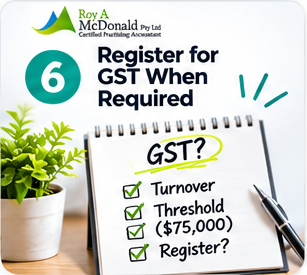
6. Not Registering for GST When Required
If your business reaches the GST registration threshold, you may be required to register for GST.
For most businesses, GST registration is compulsory when current or projected GST turnover reaches $75,000. This is based on turnover, not profit.
Failing to register when required can result in backdated GST obligations and unexpected liabilities.
How to avoid it: Monitor your business turnover throughout the year, particularly as your business grows. Don’t wait until the end of the financial year to check whether you’ve reached the threshold.
7. Not Putting Money Aside for Tax and GST
One of the biggest cash flow mistakes small businesses make is treating all money received from customers as available spending money.
However, a portion of that money may need to be allocated towards GST, PAYG withholding, income tax and employee superannuation obligations.
When payment deadlines arrive, not having enough money set aside can put significant pressure on your business.
How to avoid it: Establish a regular habit of transferring money into a separate account for upcoming tax and statutory obligations. Review your cash flow regularly so you’re prepared for upcoming payments.
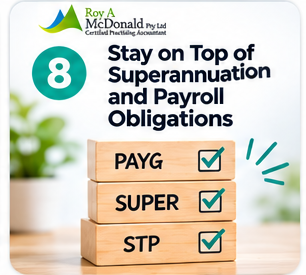
8. Missing Superannuation and Payroll Obligations
Employing staff brings additional responsibilities, including PAYG withholding, Single Touch Payroll (STP) reporting and superannuation obligations.
Missing payment deadlines or incorrectly processing payroll can result in additional costs and compliance issues.
How to avoid it: Ensure your payroll software is configured correctly, regularly review employee details and stay up to date with superannuation payment requirements. Build payroll and superannuation deadlines into your business calendar.
9. Treating Business Assets as Everyday Expenses
Purchasing equipment, machinery, computers or vehicles can have different tax implications depending on the nature of the purchase and the applicable tax rules.
Not every business purchase can be claimed as an immediate deduction. Some assets may need to be depreciated over time.
How to avoid it: Keep records of all significant business purchases and provide your accountant with the relevant invoices and details. They can determine the appropriate tax treatment and whether any small business concessions or depreciation rules apply.
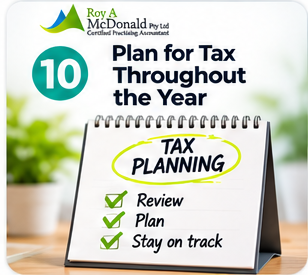
10. Leaving Tax Planning Until the End of the Financial Year
Waiting until tax return time to think about your tax position can mean missed opportunities to plan ahead.
Without regular financial reviews, you may not know how much tax to expect, whether your business is performing as expected or whether there are upcoming obligations that need attention.
How to avoid it: Don’t make tax planning a once-a-year activity. Regularly review your profit and loss, cash flow and business expenses. Meeting with your accountant throughout the year can help identify opportunities, address potential issues and ensure you’re making informed financial decisions.
A Little Preparation Goes a Long Way
Managing your small business tax obligations doesn’t need to be complicated. With accurate bookkeeping, good record keeping and a clear understanding of your responsibilities, you can reduce the risk of costly mistakes and spend more time focusing on running your business.
An experienced accountant can help you stay on top of your obligations, identify potential issues and make sure your business is structured and managed as efficiently as possible.
Need a hand getting your business finances in order?
At Roy A McDonald Accountants, we work with small business owners to help manage their accounting, taxation and compliance requirements throughout the year.
Get in touch with our team to find out how we can help keep your business on track.
references:
https://business.gov.au/news/tax-time-mythbusting?utm_source=chatgpt.com
https://smallbusiness.taxsuperandyou.gov.au/record-keeping/record-keeping-tips?utm_source=chatgpt.com
https://smallbusiness.taxsuperandyou.gov.au/claiming-small-business-tax-deductions?utm_source=chatgpt.com